
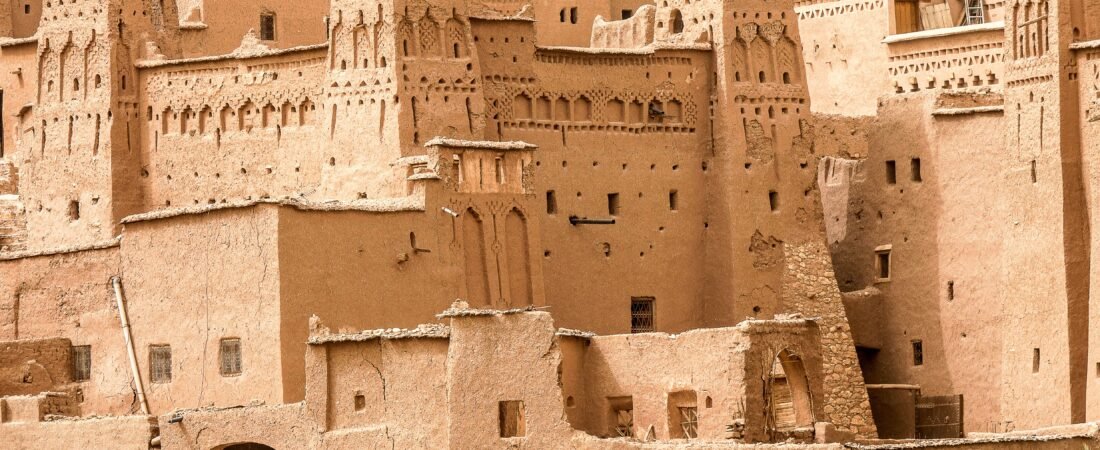
Ouarzazate is one of the most fascinating destinations in southern Morocco. Known as the Gateway to the Sahara and the Hollywood of the Desert, this remarkable city brings together cinematic history, ancient kasbahs, dramatic landscapes, Amazigh culture, and unforgettable desert adventures.
Located between the High Atlas Mountains and the vast landscapes leading toward the Sahara, Ouarzazate is much more than a stopover. It is a destination where travelers can explore historic villages, discover traditional Moroccan architecture, taste regional food, and follow in the footsteps of famous film productions. This complete Ouarzazate travel guide explains what to see, what to do, when to visit, and how to experience the city responsibly.
Why Visit Ouarzazate?
Ouarzazate offers a unique combination of desert tourism, cultural heritage, outdoor exploration, and cinema. Its dry climate, golden mountains, palm-filled valleys, and red-earth architecture create scenery unlike anywhere else in Morocco.
- Film lovers can visit studios and locations used in major international productions.
- History enthusiasts can explore centuries-old kasbahs and fortified villages.
- Adventure travelers can enjoy desert excursions, hiking, camel rides, and 4×4 tours.
- Culture lovers can discover Amazigh traditions, local crafts, music, and hospitality.
- Food travelers can enjoy tagine, couscous, dates, mint tea, and regional specialties.
Ouarzazate and the Cinema Industry
Ouarzazate is internationally recognized as one of the most important filming destinations in Morocco. Its open landscapes, reliable sunlight, historic architecture, and proximity to the Sahara make it an ideal natural film set. The city has welcomed productions from around the world and has become closely associated with epic historical films, television series, and adventure stories.
Visit the Atlas Film Studios
The Atlas Film Studios are among the main attractions in Ouarzazate. Visitors can explore large outdoor sets, props, decorated buildings, and scenery created for film productions. Guided visits explain how the sets were designed and how the region’s landscapes have been transformed for cinema.
A studio visit is especially enjoyable for travelers interested in film history, photography, architecture, and behind-the-scenes production. Because filming schedules and accessible areas can change, visitors should check current opening information before planning their visit.
Film Locations Around Ouarzazate
The wider region contains many recognizable locations used by filmmakers. The combination of desert valleys, mountain roads, palm groves, and fortified settlements provides a visually powerful setting for stories inspired by ancient civilizations, exploration, and fantasy.
Travelers should remember that some locations are working communities rather than theme parks. Respecting residents, asking before taking photographs, and following local guidance helps preserve the relationship between tourism and local life.
Aït Benhaddou: Morocco’s Most Famous Kasbah
Aït Benhaddou is a spectacular fortified village near Ouarzazate and one of Morocco’s most celebrated cultural landmarks. Built from earthen architecture, the settlement rises above the surrounding landscape with towers, narrow lanes, courtyards, and traditional houses.
The site is recognized as a UNESCO World Heritage Site and has appeared in numerous film and television productions. Its distinctive appearance has made it one of the most photographed places in southern Morocco.
Things to Do in Aït Benhaddou
- Walk through the narrow streets of the historic ksar.
- Admire the traditional earthen architecture and decorative details.
- Climb to a higher viewpoint for panoramic views of the valley.
- Learn about the settlement’s role on historic trans-Saharan trade routes.
- Shop for local crafts, textiles, artwork, and handmade souvenirs.
The best experience usually comes from arriving early or later in the afternoon, when the light is softer and the site may feel more peaceful. Comfortable shoes, sun protection, and drinking water are essential.
Kasbahs and Earthen Architecture
Ouarzazate and the surrounding provinces are famous for their kasbahs, fortified homes and settlements traditionally built from mud and earth. These structures were designed to provide protection, shade, and practical living spaces in a challenging environment.
The architecture reflects local knowledge of climate and materials. Thick walls help reduce heat during the day and retain warmth at night, while decorative geometric designs express Amazigh artistic traditions.
Visitors can explore historic kasbahs in and around Ouarzazate, including the Taourirt Kasbah, one of the city’s most important landmarks. Its rooms, passageways, courtyards, and towers provide an insight into the power and lifestyle of former regional leaders.
Ouarzazate and the Sahara Desert
Ouarzazate is an important base for travelers heading toward the Sahara Desert. Although the city itself is not located among the largest sand dunes, it connects travelers with desert gateways, valleys, oases, and routes leading toward destinations such as Zagora and Merzouga.
Desert Experiences from Ouarzazate
- 4×4 desert excursions across rocky plateaus, valleys, and remote tracks.
- Camel rides through desert landscapes and palm-filled oases.
- Overnight desert camps with traditional meals, music, and stargazing.
- Sunrise and sunset tours across the changing colors of the desert.
- Oasis visits where palm trees and villages contrast with the surrounding arid landscape.
For longer desert journeys, it is important to choose a reputable tour operator, confirm transportation details, and ask about accommodation, meals, safety, and environmental practices. Desert conditions can be demanding, particularly during periods of extreme heat.
Nature and Outdoor Activities
The area surrounding Ouarzazate offers a variety of landscapes, from mountain passes and dry valleys to palm groves and rocky desert plains. These environments are ideal for travelers who enjoy photography, hiking, road trips, and peaceful outdoor experiences.
Draa Valley and Palm Groves
The Draa Valley is known for its long stretches of palm groves, traditional villages, and historic kasbahs. The contrast between green oases and the surrounding desert creates some of the most beautiful scenery in southern Morocco.
Road Trips Through Southern Morocco
Ouarzazate is an excellent starting point for scenic drives across the High Atlas and the pre-Saharan region. Roads lead through dramatic mountain passes, remote villages, and valleys shaped by centuries of trade and agriculture.
Drivers should allow extra time, avoid rushing, and check road conditions before traveling. Distances can appear short on a map but may take longer because of mountain roads and changing weather conditions.
Traditional Moroccan Food in Ouarzazate
Food is an essential part of the Ouarzazate experience. Local cuisine combines Moroccan culinary traditions with ingredients shaped by the desert and oasis environment.
What to Eat in Ouarzazate
- Tagine prepared with vegetables, chicken, lamb, or other local ingredients.
- Couscous served with vegetables, meat, and fragrant spices.
- Mechoui, a traditional slow-roasted meat dish served on special occasions.
- Harira, a comforting soup often enjoyed as a starter.
- Dates and almonds, common products in oasis regions.
- Fresh salads made with seasonal vegetables and herbs.
- Moroccan mint tea, an important symbol of hospitality and social connection.
For an authentic culinary experience, try family-run restaurants, local cafés, and traditional guesthouses. Travelers with dietary restrictions should explain their needs clearly and confirm ingredients before ordering.
Amazigh Culture and Local Traditions
Southern Morocco is deeply connected to Amazigh culture. Music, language, architecture, clothing, crafts, and hospitality all contribute to the region’s distinctive identity.
Visitors may encounter traditional carpets, woven textiles, silver jewelry, pottery, leather products, and handmade decorations. Buying directly from local artisans or cooperatives can support traditional skills and provide a more meaningful souvenir.
Travelers should approach local culture with curiosity and respect. Learning a few basic greetings, dressing appropriately, and asking permission before photographing people are simple ways to build positive connections.
Best Time to Visit Ouarzazate
The most comfortable times to visit Ouarzazate are generally spring, from March to May, and autumn, from September to November. Temperatures are often more suitable for sightseeing, walking, and desert excursions during these seasons.
Summer can be extremely hot, especially during the middle of the day. Winter days may be sunny and pleasant, but evenings and nights can become very cold. Visitors should pack layers, sun protection, comfortable walking shoes, and enough water for outdoor activities.
How Many Days Should You Spend in Ouarzazate?
A short visit of two days allows travelers to explore the main city landmarks, Taourirt Kasbah, a film studio, and Aït Benhaddou. A stay of three to five days gives more time for the Draa Valley, local villages, nature, photography, and a desert excursion.
Ouarzazate also works well as part of a wider Morocco itinerary connecting Marrakech, the High Atlas Mountains, Aït Benhaddou, the Dades Valley, the Todra Gorge, and the Sahara.
Practical Travel Tips
- Carry water and sun protection during outdoor excursions.
- Wear comfortable shoes for kasbahs, rocky paths, and medina streets.
- Book desert trips with established and transparent operators.
- Carry some cash for small shops, local cafés, and rural areas.
- Ask permission before photographing residents, artisans, and private spaces.
- Respect historic buildings by avoiding climbing on fragile walls.
- Support local businesses, guides, artisans, and community-based accommodation.
Frequently Asked Questions About Ouarzazate
Is Ouarzazate worth visiting?
Yes. Ouarzazate is worth visiting for its cinema heritage, historic kasbahs, desert landscapes, Amazigh culture, and access to some of southern Morocco’s most impressive attractions.
Is Ouarzazate in the Sahara Desert?
Ouarzazate is located in a pre-Saharan region and is widely known as a gateway to the Sahara. The city connects travelers with desert routes and destinations, although the largest sand-dune experiences usually require additional travel.
What is Ouarzazate famous for?
Ouarzazate is famous for its film studios, Aït Benhaddou, Taourirt Kasbah, desert scenery, earthen architecture, and its role as a starting point for exploring southern Morocco.
What should I buy in Ouarzazate?
Popular purchases include Amazigh carpets, textiles, pottery, leather goods, silver jewelry, spices, dates, and locally made decorative objects.
Conclusion: Discover the Magic of Ouarzazate
Ouarzazate is a destination of contrasts: ancient kasbahs and modern cinema, peaceful oases and dramatic desert landscapes, traditional food and international travel experiences. It offers far more than a quick stop between major Moroccan cities.
Whether you are interested in cinema, tourism, the Sahara Desert, kasbahs, Moroccan cuisine, photography, or Amazigh heritage, Ouarzazate provides an unforgettable journey through the heart of southern Morocco.